Is Crushed Concrete Good Road Base for a Driveway?
Crushed concrete makes a solid base for a private driveway if it's clean, well graded and compacted in layers. How to crush, lay and check it in Brisbane.
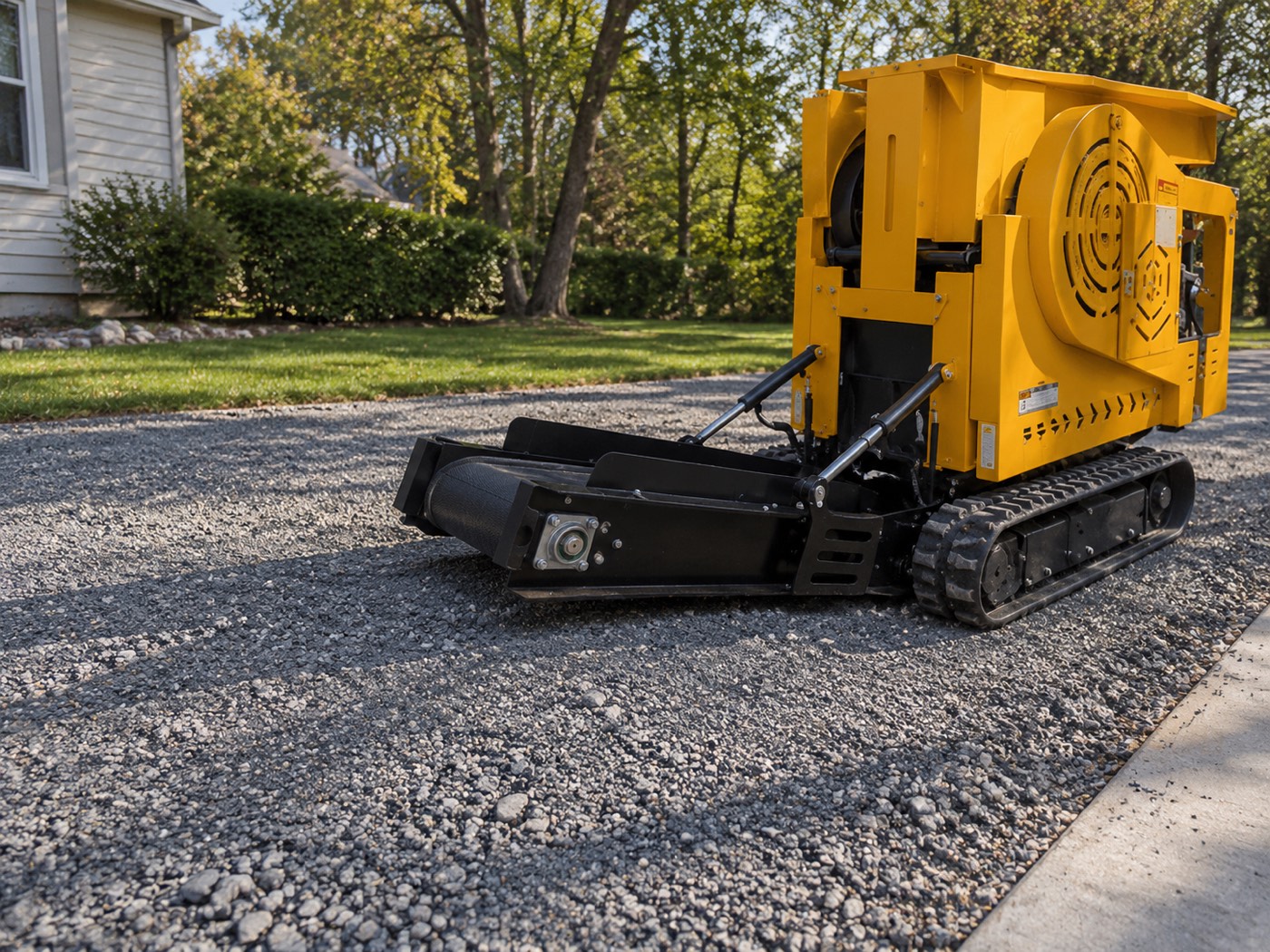
Yes, crushed concrete is good road base for most private driveways, as long as it’s clean, has a decent mix of coarse stone and fines, and gets compacted properly in layers. What it isn’t, automatically, is a certified spec road base. If your driveway has to meet a council standard or carry heavy vehicles, check the specification with an engineer, certifier or your local council before you commit.
The good news is that a lot of Brisbane driveway jobs start with an old slab that has to come out anyway. Crushing that slab and putting it straight back under the new driveway saves on truck movements both ways.
Why does crushed concrete work as a driveway base?
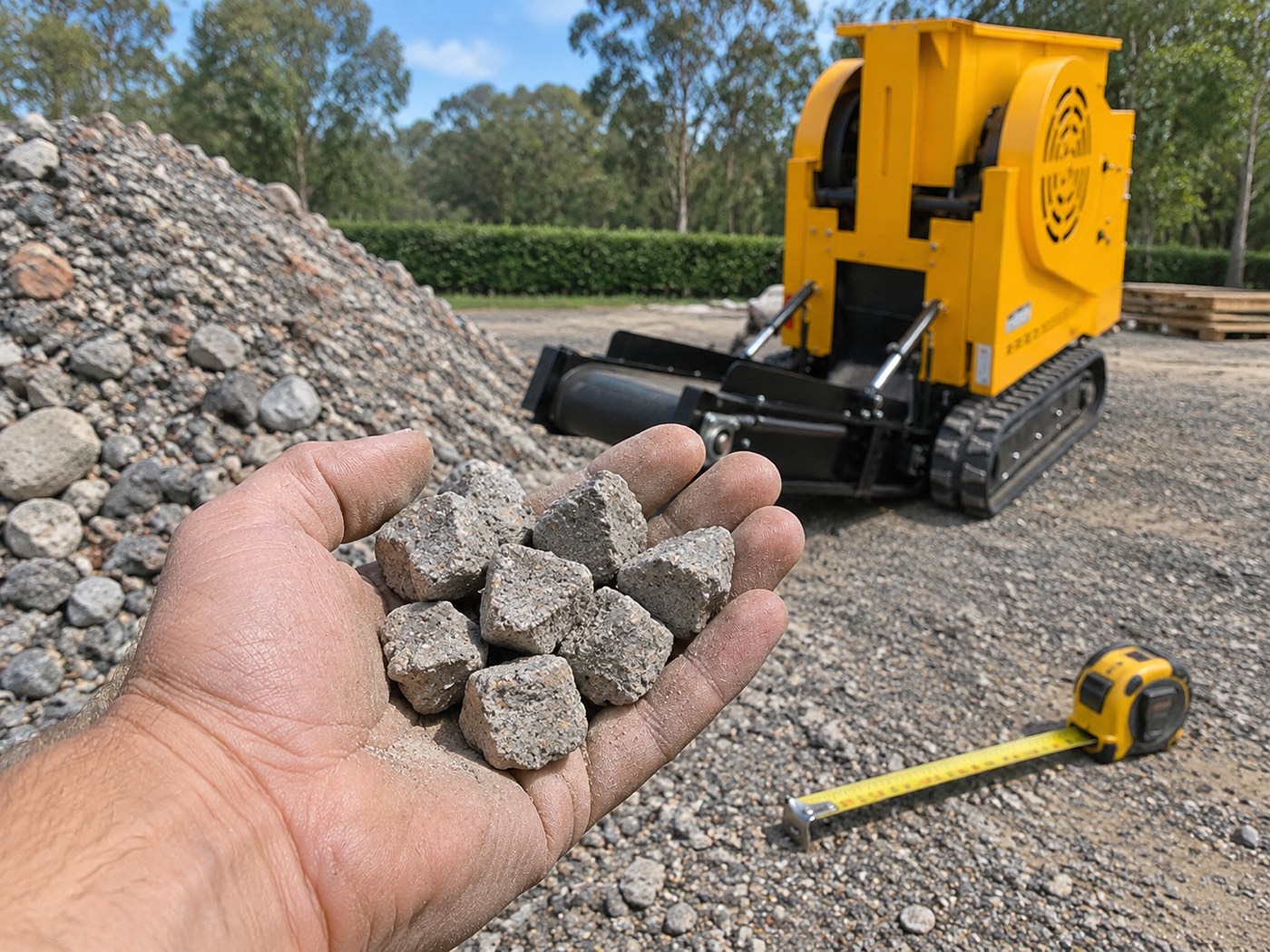
Concrete is basically stone, sand and cement already stuck together. When you crush it, you get angular pieces of aggregate plus a fair amount of fine material and cement dust. Angular stone locks together under compaction much better than round pebbles do, and the fines fill the gaps. That’s the same principle behind most road base products.
A few things make it work well for a home job:
- it’s hard and durable once compacted
- it drains better than clay or topsoil
- you’re reusing material you already paid for once
- there’s no tipping, carting or waiting for a supplier delivery
Is crushed concrete as good as quarry road base?
It can perform very well, but it isn’t the same product. Commercial road base is made to a grading specification and tested. Material crushed on site from your own slab hasn’t been tested, and its grading will depend on what went in and how you set the machine. For a private driveway, shed pad or garden path, that’s rarely a problem. For a council crossover, a subdivision road or anything engineered, use whatever your engineer or certifier specifies.
What size should the crushed concrete be?
The Hightop HTJC430 produces crushed material between 15 and 50 mm, depending on the setting. It accepts feed up to 200 mm through a 220 × 350 mm opening, so larger slab pieces need to be broken down first.
Here’s a rough guide to how people tend to use different output sizes on a driveway job:
| Output setting | Typical use on a driveway job |
|---|---|
| Coarse (around 40–50 mm) | Lower base layer, filling soft spots, drainage behind kerbs |
| Medium (around 25–30 mm) | Main base course on firm ground |
| Fine (around 15–20 mm) | Upper layer that binds tight under the compactor |
Treat that table as a starting point, not a spec. Your soil and the job matter more than the number on the crusher.
Do I need to crush it twice?
Not usually. Most people pick one setting and get on with it. If you want a coarse bottom layer and a finer top layer, crush the bottom-layer pile first, then change the setting and do the rest. It’s worth planning that order before delivery day so you’re not moving piles around twice.
How do I lay a crushed concrete driveway?
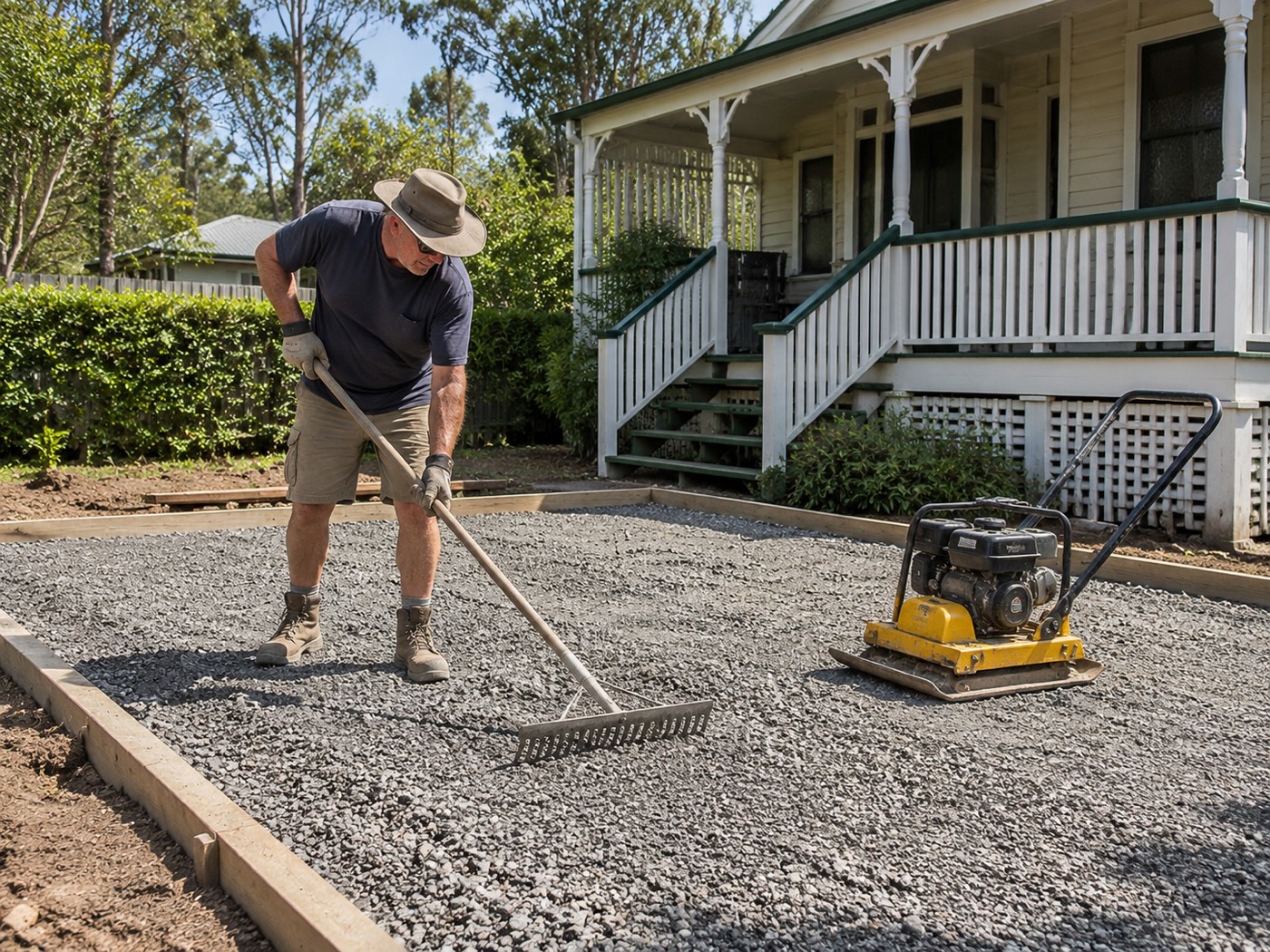
The method is the same as any compacted gravel base. Nothing fancy, just patience.
- Strip the site. Remove topsoil, roots and anything soft. Organic material under a driveway will rot and sink.
- Check drainage. Water is the enemy of every driveway. Make sure the surface falls away from the house and that runoff has somewhere to go.
- Spread in thin layers. Several thin layers compact far better than one thick one.
- Moisten and compact each layer. Slightly damp material compacts best. Bone dry won’t bind, and soaking wet turns to porridge.
- Finish with the finer material. A tight, fine top layer gives a firmer surface, or a good base for pavers, asphalt or a new slab.
How much crushed concrete will I need?
Work out the volume first: length × width × depth, all in metres. Here’s an example with placeholders for you to fill in.
Example: a driveway 12 m long × 3 m wide with a base depth of D metres needs 12 × 3 × D m³ of compacted material. Crushed material bulks up when loose and settles when compacted, so allow extra. Your contractor or engineer can tell you a sensible depth for your soil and traffic.
The machine handles roughly 2 to 3 tonnes an hour, so a typical domestic slab can often be crushed in a day or two. The cost article has worked examples of hire length and price.
What can’t go into the crusher for road base?
Clean concrete, bricks and masonry, clean natural rock and stone, and clean asphalt are all fine. Prohibited items are asbestos or asbestos-containing material, hazardous or contaminated waste, gas bottles, sealed containers, tyres, large quantities of steel or reo, and anything over 200 mm.
Does reo have to come out first?
Small bits of mesh are a nuisance but manageable. Heavy reo bar and large amounts of steel are not allowed, so cut out as much as you reasonably can before feeding. Steel in your road base is also a good way to puncture a tyre later.
What about asbestos?
If your old slab, path or shed was built before 1990, have a look at what’s sitting near it. Fibre cement sheeting and old fence panels from that era often contain asbestos. Get any suspect material tested before demolition. Workplace Health and Safety Queensland publishes guidance on testing and licensed removal. Asbestos must never go through a crusher or end up under your driveway.
Do I need permission for a crushed concrete driveway?
For work entirely on your own private land, often not, but rules differ between councils across Brisbane, Logan, Moreton Bay, the Gold Coast and the Sunshine Coast. Anything that connects to the road, such as a driveway crossover over the footpath and kerb, normally has its own council requirements. Check with your council first. Before you dig at all, lodge a request with Before You Dig Australia to locate underground services. That’s the hirer’s responsibility on our machines, and it’s a good habit anyway.
How does hiring a crusher for a driveway job work?
It’s dry hire, so you or someone on your team operates the machine. The process is:
- send the job details through the booking form
- we confirm availability and delivery cost ($2 per km, one way from Oxley)
- sign the hire agreement online
- pay in full, then we deliver
Daily and weekly rates are on the pricing page, machine details are on the crusher hire page, and the FAQ covers deposits and return conditions.
What’s a sensible next step?
Measure the old slab, sketch the new driveway and decide whether it needs to meet any council or engineering spec. If it’s a private job and the concrete is clean, crushing it for base is one of the more satisfying ways to spend a weekend. Send us the details and we’ll tell you whether the timing and delivery work for your site.
Questions people ask
Can I use crushed concrete from my old slab as driveway base?
Usually, yes, as long as the concrete is clean and free of asbestos, contaminated material and lumps of steel. Crush it to a size that suits the layer you're building, spread it in thin layers and compact each one properly. For anything that needs to meet a formal spec, ask your engineer or certifier first.
What size crushed concrete is best for a driveway?
There is no single right size. Coarser material, towards 40 to 50 mm, suits a lower base layer. Finer material, towards 15 to 20 mm, binds better near the top. The Hightop HTJC430 produces output between 15 and 50 mm, so you can adjust the setting to suit each layer.
Is recycled crushed concrete the same as quarry road base?
Not necessarily. Quarry and commercial recycled road base products are made and tested to particular specifications. Material you crush yourself on site has not been tested, so it is fine for many private jobs but should not be described as spec road base unless an engineer has checked it.
How thick should a crushed concrete driveway base be?
It depends on your soil, drainage and what will drive on it. A car on firm ground needs far less than a loaded truck on soft clay. For a private driveway, get advice from a local contractor or engineer who has seen your site, then compact the base in several thin layers rather than one deep pour.