Skip Bin or Crusher? Concrete Rubble in Brisbane
Skip bin or crusher for concrete rubble in Brisbane? Compare cost, space, time and reuse with a fill-in example, plus what can and can't be crushed on site.
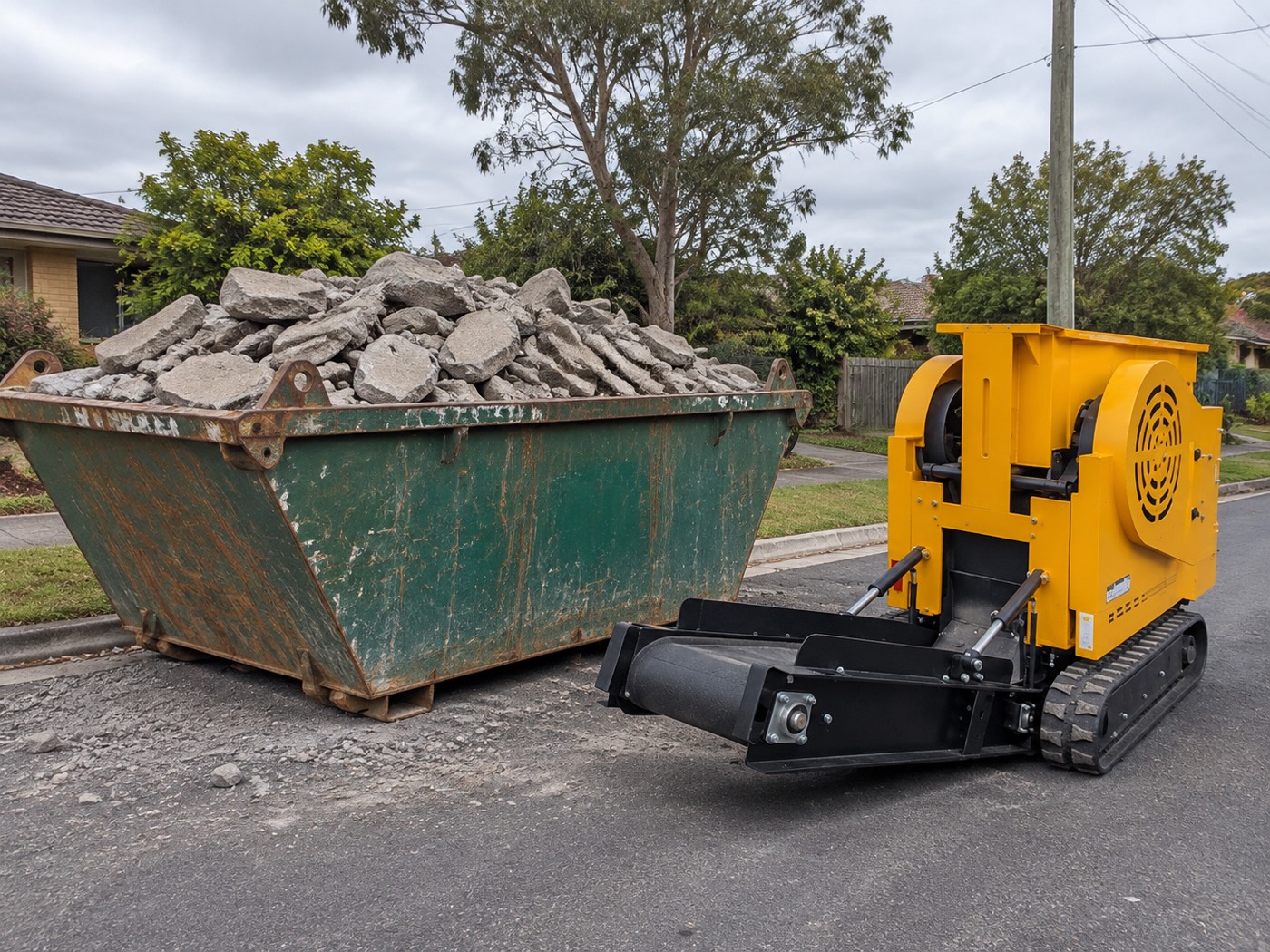
If you have a small amount of rubble, or mixed waste you can’t reuse, a skip bin is usually the simpler choice. If you have several tonnes of clean concrete, brick or rock and somewhere to use the crushed product, hiring a crusher is often cheaper and saves you buying fill later. The deciding factors are volume, cleanliness of the material, access and whether you’ll reuse it.
Most of the Brisbane jobs we hear about fall clearly on one side or the other. The tricky ones sit in the middle, so here’s how to work it out.
When does a skip bin make more sense?
A skip bin is hard to beat when:
- you’ve only got a small amount of concrete
- the rubble is mixed with timber, plaster, plastic or general waste
- you have no use for crushed material and nowhere to store it
- there’s no safe access for a tracked machine
- you’d rather not operate plant yourself
Bins are also the obvious answer when the job involves demolition waste that isn’t permitted in a crusher. More on that list below.
What do skip bins cost in Brisbane?
We’re not going to quote someone else’s prices. Bin hire and tipping costs vary by company, suburb, bin size and the type of material, and heavy waste like concrete often has its own pricing and weight limits. Ring two or three local bin companies, tell them it’s concrete rubble and ask about weight limits as well as the bin price.
When does a crusher make more sense?
A crusher earns its keep when:
- there are several tonnes of clean concrete, brick or rock
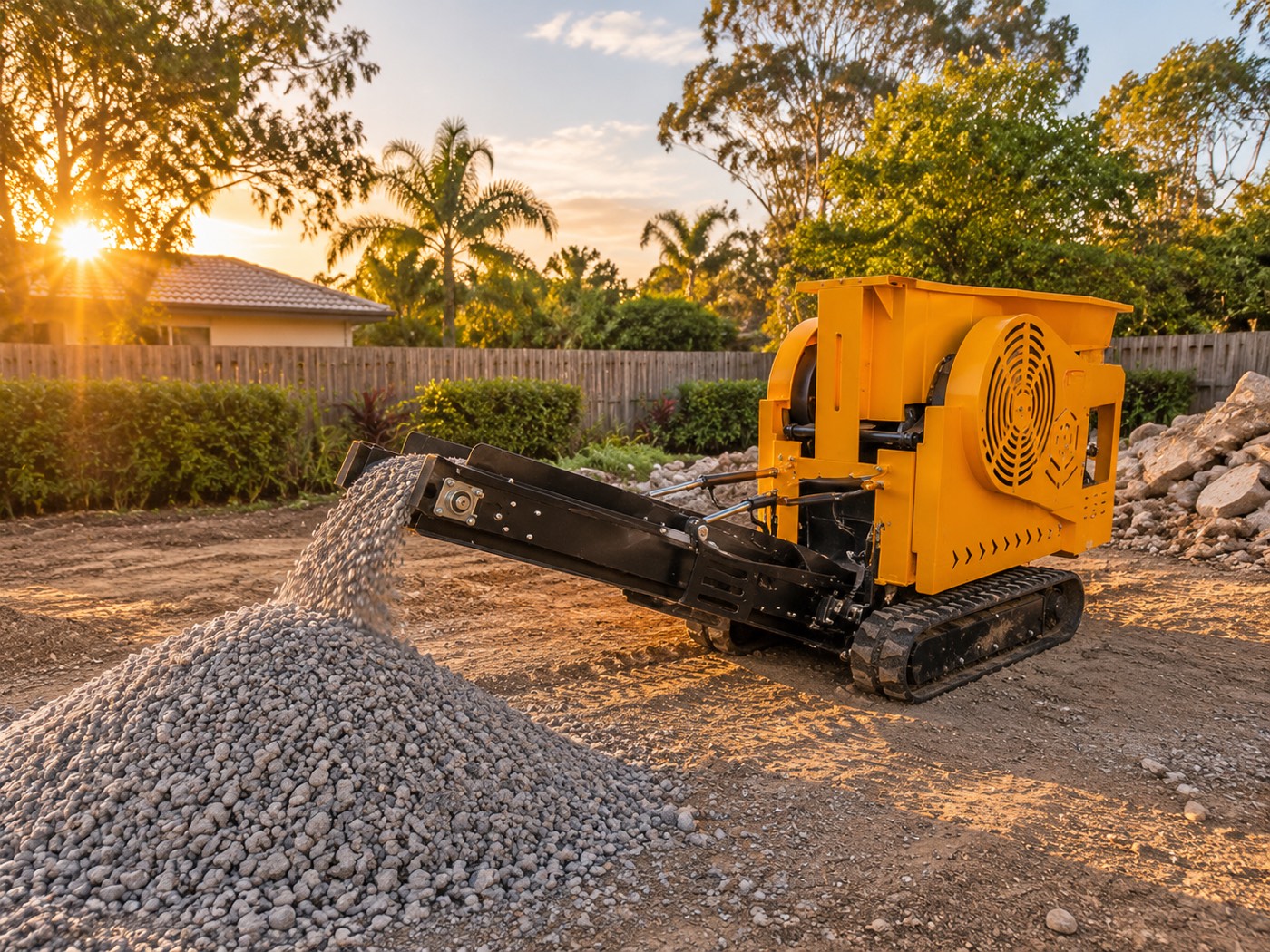
- you’ll use the output as driveway base, shed pad, path base or fill
- you’d otherwise need multiple bins and a separate delivery of road base
- there’s space on site to stockpile the crushed material
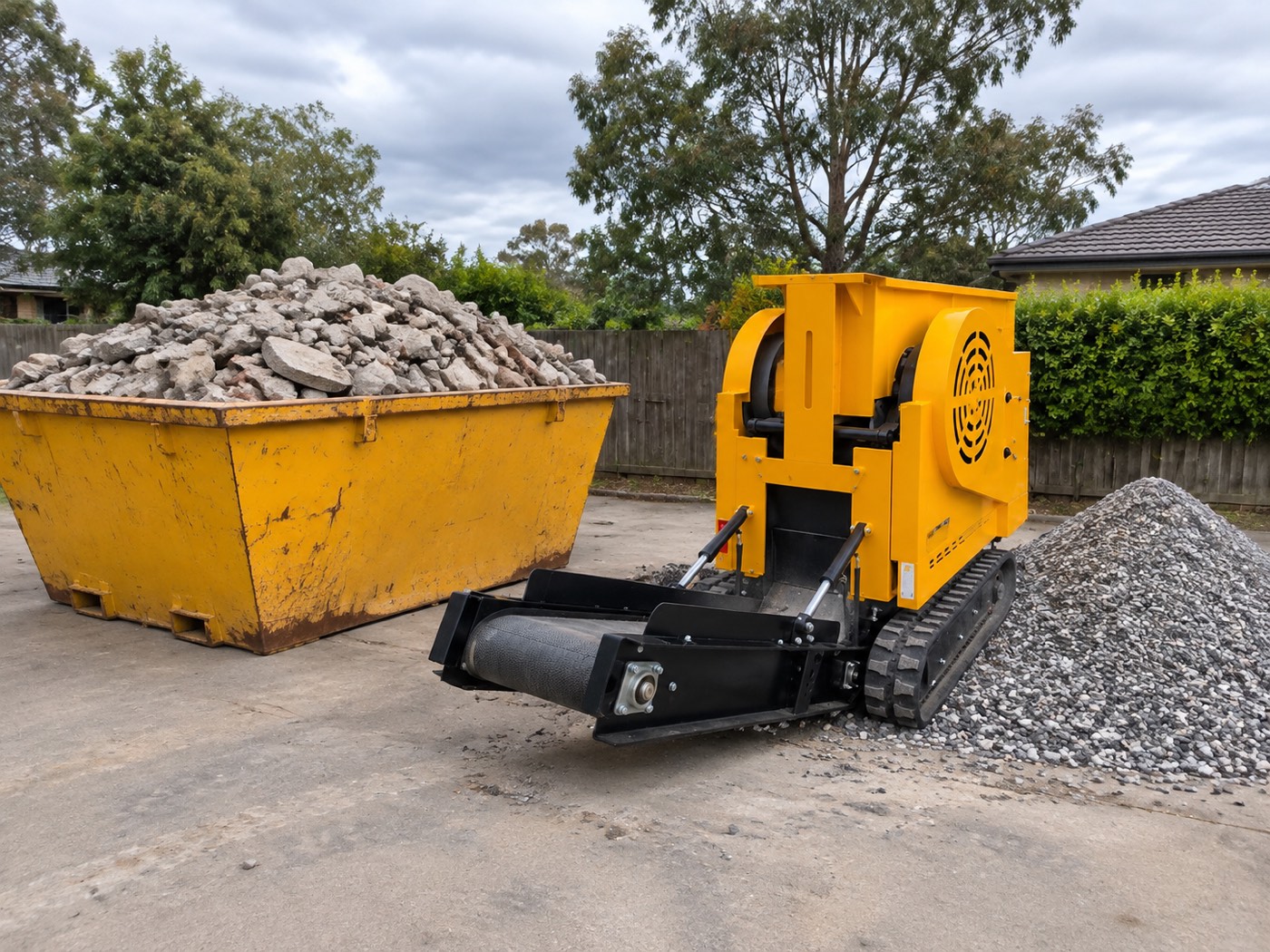
The Hightop HTJC430 processes roughly 2 to 3 tonnes an hour and turns pieces up to 200 mm into material between 15 and 50 mm. A typical domestic slab can often be done in a day or two. If you’re thinking about reusing it under a new driveway, read Is crushed concrete good road base for a driveway? first.
How do I compare the cost of a skip bin and a crusher?
Put both options side by side with your own numbers. The crusher side uses our actual rates. The bin side has placeholders because those prices are yours to find.
| Cost item | Skip bin option | Crusher option |
|---|---|---|
| Removal or hire | Bin quote × number of bins = $A | 3 days × $440 = $1,320 (example) |
| Delivery | Usually in the bin quote | 20 km × $2 = $40 (example) |
| Replacement fill or road base | Supplier quote = $B | Not needed if you reuse the output |
| Total | $A + $B | $1,360 (example) |
If $A + $B comes out higher than the crusher total, crushing wins on cost. If not, the bin wins, and there’s no shame in that.
What about a weekly hire?
If you have a big pile or several jobs on the one property, the weekly rate of $1,500 for 7 days is cheaper than four or more single days. The pricing page lists current rates, including extra engine hours beyond the 8 included each day.
What else should I weigh up besides price?
Is there room for the machine?
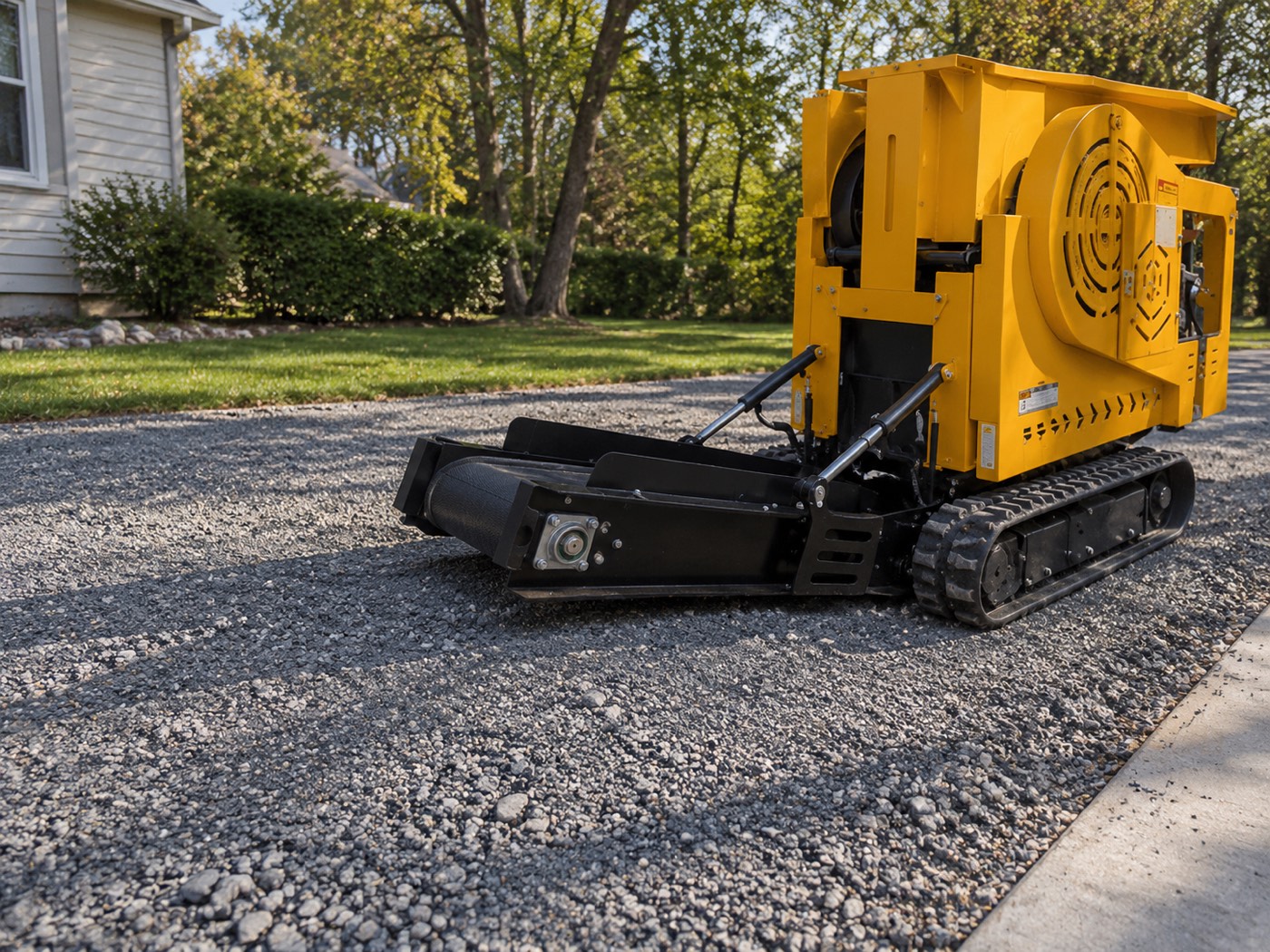
The crusher is about 1 metre wide and 3.2 metres long working, on rubber tracks, so it fits through a lot of ordinary side gates. You also need firm, reasonably level ground and space for the output pile. Older blocks in places like Paddington or Annerley can be tight, so measure the narrowest point before you book.
How much time will it take?
A bin is quick: fill it, ring for a swap, repeat. Crushing takes longer on the day because someone has to feed the machine and keep the output clear. On the other hand, you skip the waiting between bin swaps and the extra delivery of road base. On bigger piles, crushing often ends up quicker overall.
Who will run it?
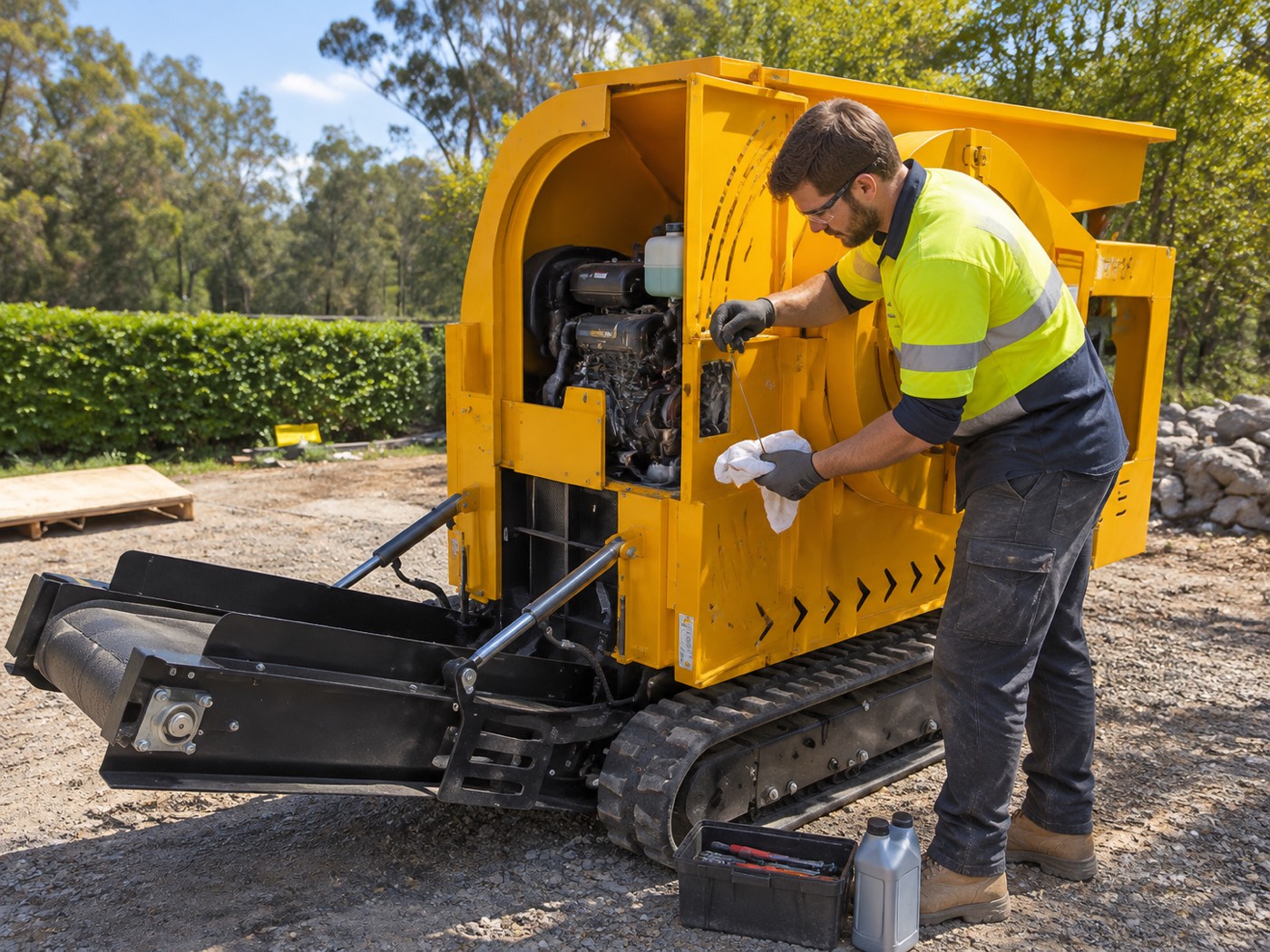
All our hires are dry hire. You or a competent person on your team operates the machine, does the daily pre-start check, and keeps people clear of the feed and conveyor. If that sounds like a bit much, a bin is the easier path. The day-one checklist covers what’s involved.
What about the neighbours?
Any crusher makes noise and some dust. Give the neighbours a heads-up, keep the material damp, and stick to reasonable working hours. Your local council sets the rules on construction noise and hours, so check them before you start.
What can’t go through a crusher?
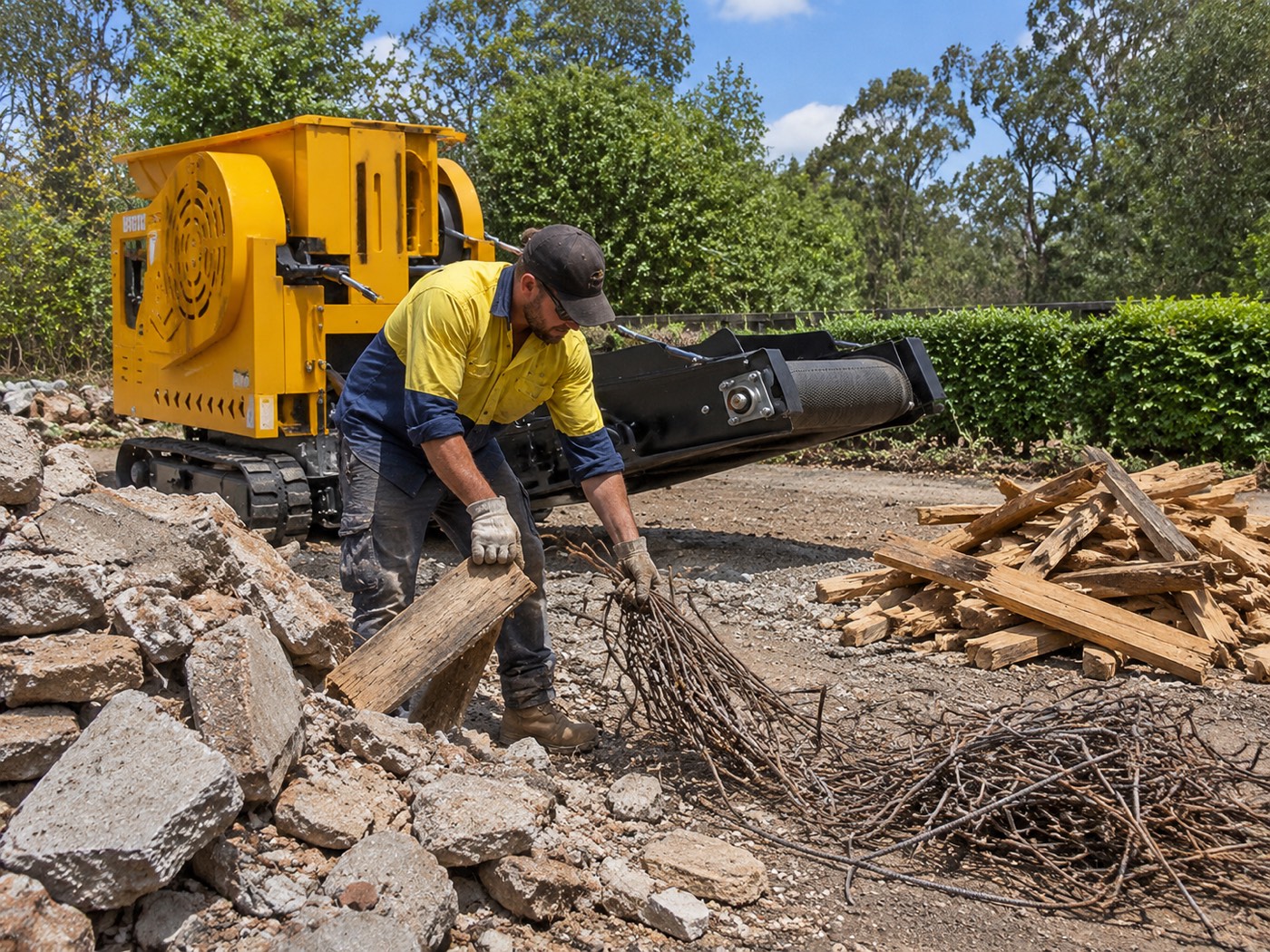
The crusher takes clean concrete, bricks and masonry, clean natural rock and stone, and clean asphalt. These items are prohibited:
- asbestos or any asbestos-containing material
- hazardous or contaminated waste
- gas bottles and sealed containers
- tyres
- large quantities of steel or reo
- anything over 200 mm
If your rubble pile includes these, they need to be separated and disposed of properly before any crushing happens.
What about asbestos in older houses?
This one matters. Queensland houses built or renovated before 1990 may contain asbestos in sheeting, eaves, flooring and old fences. If there’s any chance your demolition rubble includes it, get a sample tested before you touch the pile. Workplace Health and Safety Queensland has information on testing and licensed removal. Asbestos never goes in the crusher, and it doesn’t belong in a standard skip bin either.
How does crusher hire work if I go that way?
The steps are straightforward:
- Send your job details through the booking form.
- We confirm availability and the delivery cost from Oxley.
- You sign the hire agreement online.
- You pay in full, and we deliver.
A refundable security deposit is held during the hire, with any unused balance refunded within 5 business days. Locating underground services through Before You Dig Australia is the hirer’s job. Full terms are on the crusher hire page and in the FAQ.
What’s a sensible next step?
Estimate how much rubble you have, check it’s clean, and get two or three local bin quotes. Then put those numbers into the table above next to the crusher figures. If crushing comes out ahead and the machine fits through your gate, send us the details and we’ll confirm dates and delivery.
Questions people ask
Is it cheaper to crush concrete or put it in a skip bin?
It depends on how much rubble you have and whether you can reuse it. Skip and tipping prices vary across Brisbane, so get local quotes. Then compare them with crusher hire at $440 a day plus delivery at $2 per km from Oxley. If you'd also need to buy fill, add that to the skip side.
Can I put concrete in a general waste skip bin?
Many bin companies have separate rules and prices for heavy material such as concrete, bricks and soil, and some limit how full a bin can be because of weight. Ask the bin company directly before you load it. Overfilled or mixed bins can attract extra charges.
Will a mini crusher fit in my backyard?
The Hightop HTJC430 is about 1 metre wide and 3.2 metres long when working, and it runs on rubber tracks. If you can get it through a side gate or driveway at least that wide, with firm ground and room to stockpile, it will usually fit. Send photos with your enquiry if access is tight.
What if my rubble might contain asbestos?
Stop and get it tested. Buildings constructed before 1990 in Queensland may contain asbestos. Workplace Health and Safety Queensland has guidance on testing and licensed removal. Asbestos must not go into a crusher, and it needs specific handling and disposal, not a standard skip bin.