Hiring a Mini Crusher: A Day-One Checklist
A practical checklist for your first day with a hired mini crusher in Brisbane: site prep, Before You Dig, the pre-start check, safe feeding and the return.
Your first day with a hired mini crusher goes smoothly if three things are sorted before the truck arrives: the paperwork and payment, the site, and the material. On the day itself, it’s a pre-start check, a quick walk-around, and then steady, sensible feeding. This checklist covers each step in the order you’ll actually do it.
It’s written around the Hightop HTJC430 we hire out of Oxley, but most of it applies to any compact jaw crusher.
What should be sorted before delivery day?
Is the booking locked in?
The booking process runs in a fixed order, so check you’ve ticked off each stage:
- Enquiry sent through the booking form
- Availability and delivery cost confirmed (delivery is $2 per km, one way from Oxley)
- Hire agreement signed online
- Hire paid in full, including the refundable security deposit
The machine isn’t delivered until all four are done. Rates are on the pricing page.
Have you located underground services?
This is your responsibility as the hirer, and it’s not optional. Lodge a request with Before You Dig Australia well before delivery. A tracked machine moving across a yard, plus a pile of rubble and the work involved in breaking up a slab, is a good way to find a water main the hard way.
Will the machine fit?
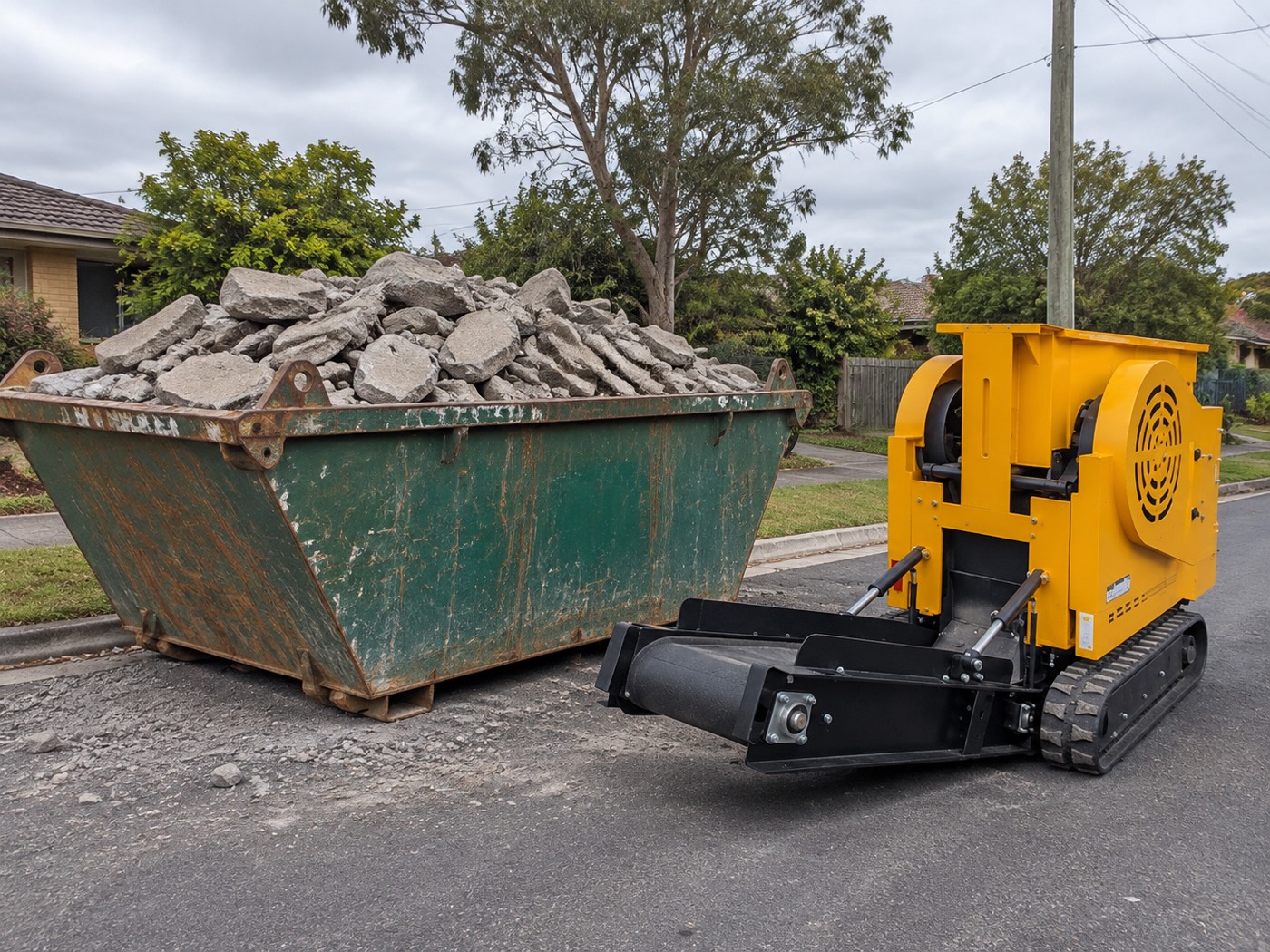
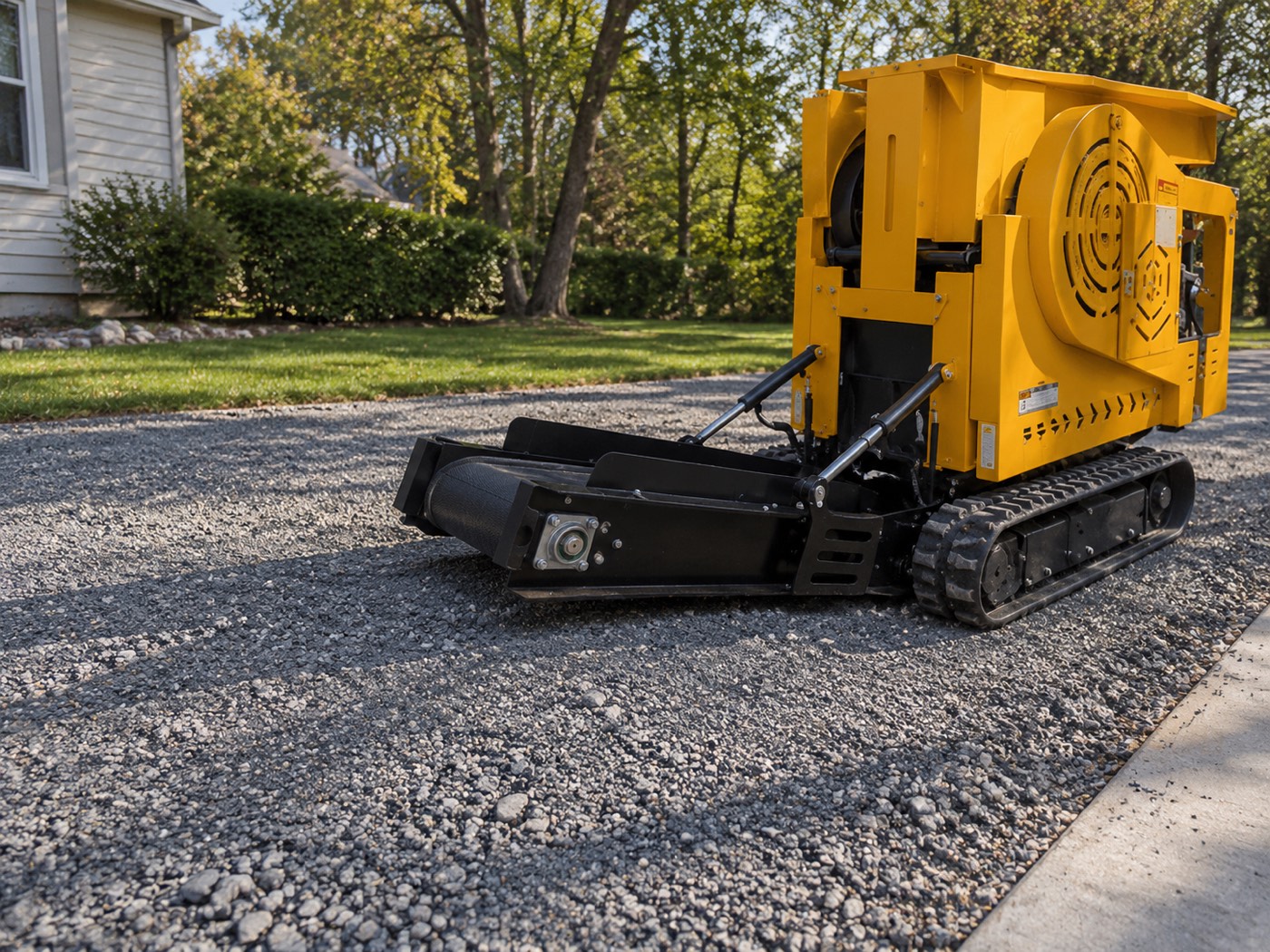
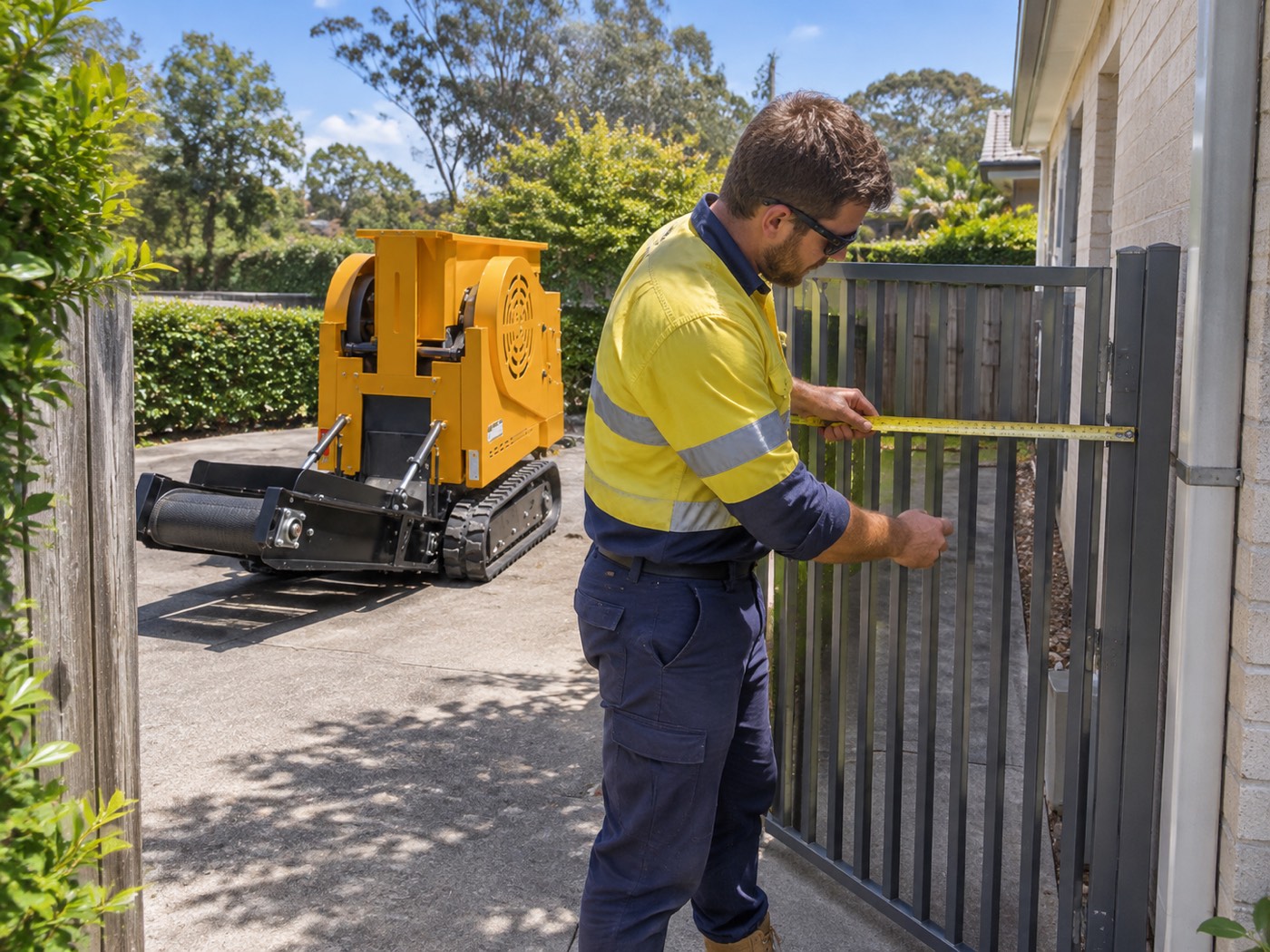
Walk the route from the street to where the crusher will sit. The HTJC430 is about 1 metre wide and 3.2 metres long when working, on rubber tracks. You need:
- a clear path at least that wide, including gates
- firm ground that won’t bog a tracked machine after rain
- a reasonably level spot to work from
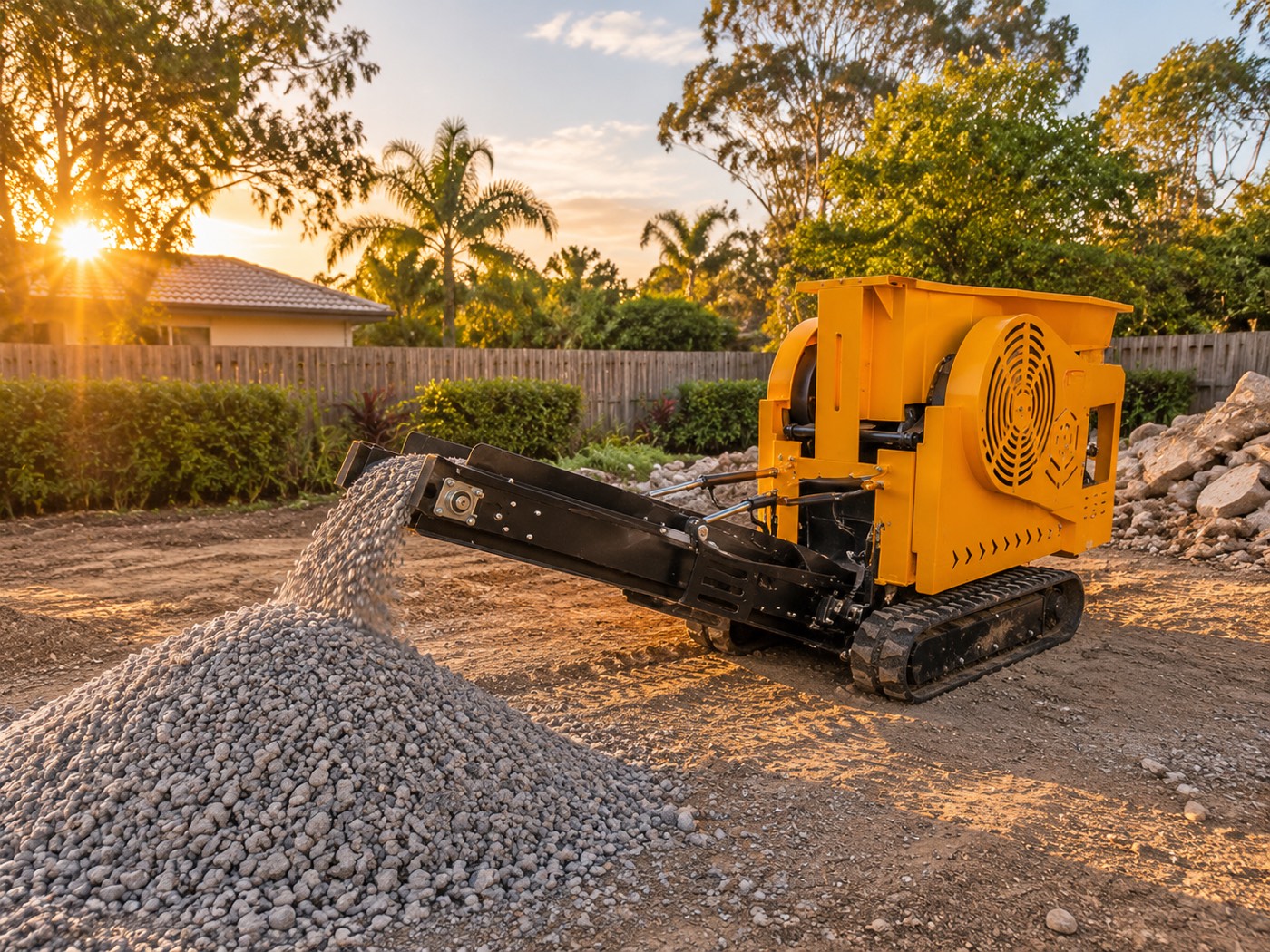
- room in front of the conveyor for the output pile
- space around the machine to work and keep people clear
The machine must stay at the site approved in the hire agreement. Moving it to a mate’s place down the road for a second job isn’t on.
Is the material ready?
Sort the pile before the machine arrives. It’s much easier than doing it with the engine running.
Permitted: clean concrete, bricks and masonry, clean natural rock and stone, clean asphalt.
Prohibited: asbestos or asbestos-containing material, hazardous or contaminated waste, gas bottles, sealed containers, tyres, large quantities of steel or reo, and anything over 200 mm.
If the rubble came from a building constructed before 1990, think about asbestos before anything else. Get suspect material tested and follow the guidance from Workplace Health and Safety Queensland. Cut out as much reo as you can, and break pieces down so they fit the 220 × 350 mm feed opening and are no bigger than 200 mm.
What do I check on the morning of day one?
What’s on the pre-start check?
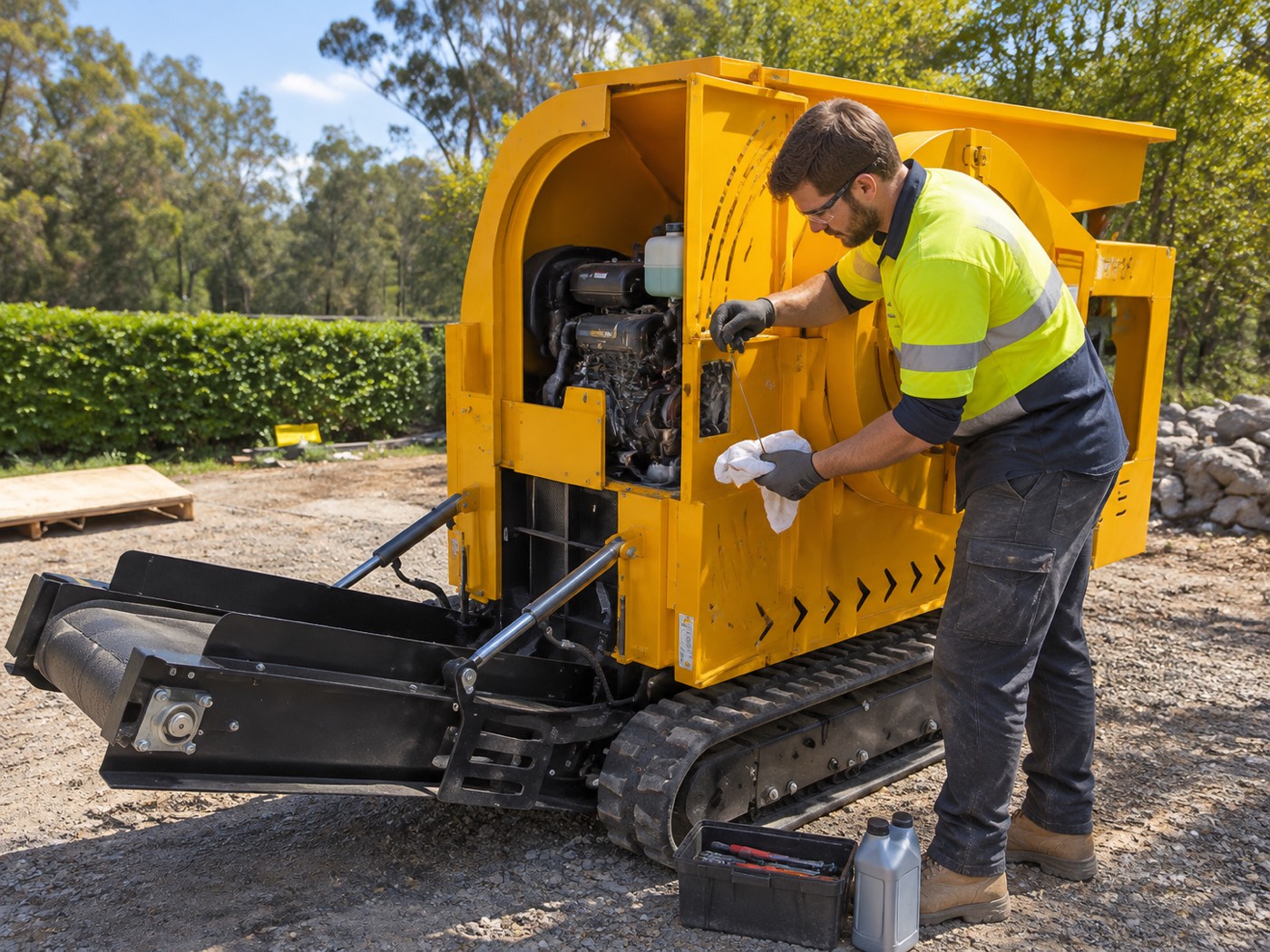
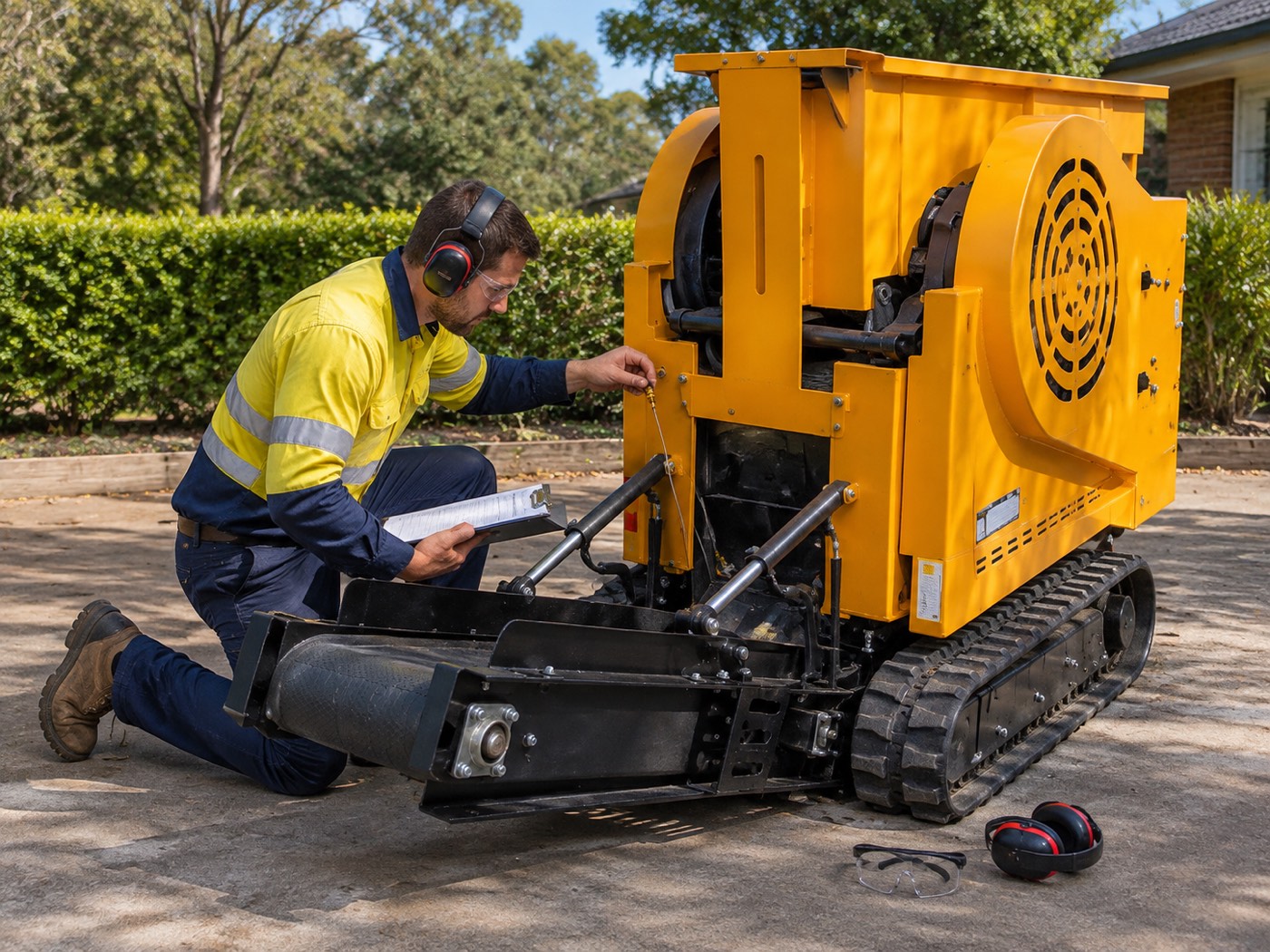
Do this every morning of the hire, before the engine starts. It doesn’t take long, and it’s part of the hire terms.
| Item | What to look for |
|---|---|
| Engine oil | Level between the marks, no obvious leaks |
| Hydraulic oil | Level correct, no leaks around hoses or fittings |
| Coolant | Level correct when the engine is cold |
| Fuel | Enough for the day; note the starting level |
| Belts | Not cracked, frayed or loose |
| Guards | All fitted and secure |
| Tracks | No cuts, damage or debris jammed in |
| Safety devices | All fitted, undamaged and working |
If anything doesn’t look right, don’t start it. Ring us. A quick phone call is better than a damaged machine and a lost day.
Have you noted the fuel level and engine hours?
Take a photo of the fuel gauge and the hour meter at the start. The machine goes back with the same fuel level it arrived with, and each hire day includes 8 engine hours. Extra hours are charged, and the current rate is on the pricing page.
How do I run the crusher safely?
Who should be near the machine?
As few people as possible. One competent operator, plus a helper if you’re hand feeding. Kids, pets and curious neighbours stay well back. Nobody stands on the machine, reaches into the jaw or stands in line with the conveyor while it’s running.
How should I feed it?
Steady and consistent beats fast and frantic. A few rules that save trouble:
- feed pieces no larger than 200 mm
- don’t overload the jaw, let it clear between loads
- watch for steel and pull it out before it goes in
- stop the machine before clearing any blockage
- keep the output pile from building up under the conveyor
Expect roughly 2 to 3 tonnes an hour depending on the material. If you’re crushing for a driveway, set the output size to suit the layer, anywhere from 15 to 50 mm. The road base article has a table on which sizes suit which layer.
How do I keep the dust and noise down?
Lightly wet the pile before crushing to keep dust under control. Wear hearing and eye protection, gloves and steel-capped boots, and a suitable dust mask. Let the neighbours know ahead of time, and stick to the working hours your council allows.
What happens at the end of each day?
A short shutdown routine:
- Let the machine run empty so nothing is left in the jaw.
- Shut down properly following the machine’s instructions.
- Clear loose material from the tracks and around the conveyor.
- Note the hour meter reading.
- Secure the site so nobody can get near the machine overnight.
How do I return the crusher?
On the last day, make sure the machine is:
- reasonably clean, with no thick crust of concrete dust
- refuelled to the same level as on delivery
- at the approved site, ready for pickup
Once it’s checked, any unused balance of your security deposit is refunded within 5 business days. More on returns and deposits is in the FAQ, and full machine details sit on the crusher hire page.
What’s a sensible next step?
Print or save this checklist, walk your site with a tape measure, and lodge your Before You Dig request. If everything checks out, send your dates through the booking form and we’ll confirm availability and delivery from Oxley.
Questions people ask
What do I need to do before a hired crusher is delivered?
Make sure the hire agreement is signed and paid, the site is the one approved in the agreement, and there is firm, clear access at least 1 metre wide. Locate underground services through Before You Dig Australia, sort out any prohibited material, and pick a spot for the crushed output pile.
What does the daily pre-start check involve?
Each morning before starting, check engine oil, hydraulic oil, coolant and fuel levels, inspect the belts, make sure all guards are fitted, look over the rubber tracks and confirm the safety devices work. If anything looks wrong, don't start the machine. Ring us first.
Do I need a licence to operate a mini crusher?
Our hire terms require a competent operator, meaning someone who can run plant safely and follow the machine's instructions. Check the current Workplace Health and Safety Queensland requirements for your situation, especially on a commercial site, where the principal contractor may have extra rules.
How should I return the crusher?
Return it reasonably clean, with the same fuel level it had on delivery, at the site it was approved for. Once it's checked, any unused part of your refundable security deposit is returned within 5 business days.